
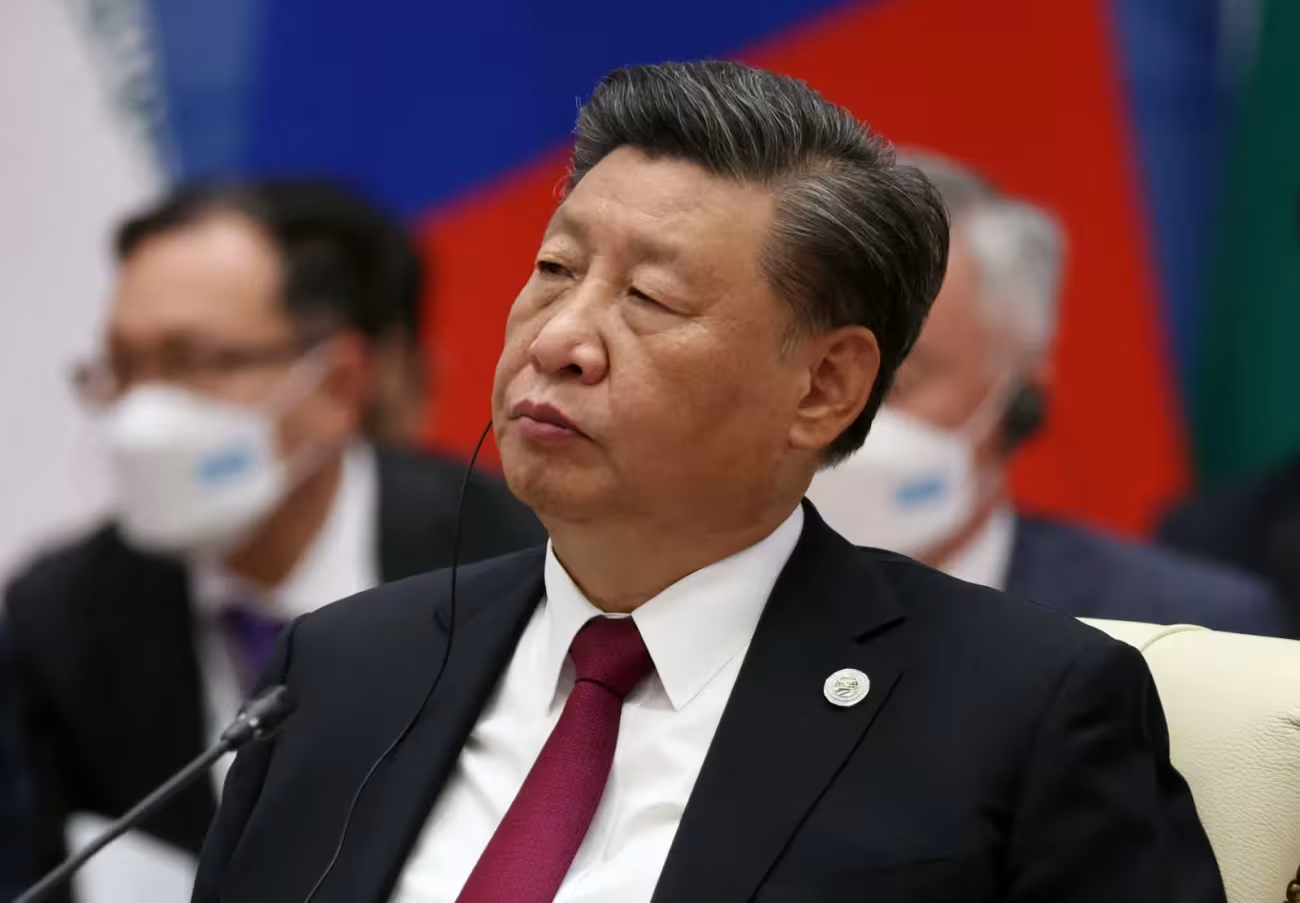
In September 2022, social media was flooded with extraordinary claims that Chinese President Xi Jinping had been placed under house arrest following a military coup led by the People's Liberation Army (PLA). Some posts alleged that General Li Qiaoming had taken control of the Chinese government and was preparing to replace Xi as the country's new president.
The rumors spread rapidly across Twitter, Facebook, YouTube, and Chinese-language social media platforms. Viral posts cited alleged military movements toward Beijing, widespread flight cancellations, railway disruptions, and Xi's sudden absence from public appearances as evidence that a major political crisis was unfolding in China.
However, the allegations were not supported by credible evidence. On September 27, 2022, Xi Jinping appeared publicly in Beijing for the first time since returning from an overseas trip, undermining the central claim that he had been detained. Subsequent political developments also demonstrated that Xi remained firmly in control of China's Communist Party and military leadership.
The episode became one of the most widely circulated political rumors about China in 2022, illustrating how limited information about the country's internal political system can create an environment for speculation and misinformation.
Did Xi Jinping Really Get Arrested in a Military Coup?
No credible evidence established that Xi Jinping was arrested, placed under house arrest, or removed from power in September 2022. There was also no independently verified evidence that the Chinese military had launched a coup against his government.
The rumors emerged during a period when Xi had temporarily disappeared from public view after attending the Shanghai Cooperation Organization (SCO) summit in Uzbekistan on September 15 and 16, 2022.
Xi returned to Beijing on September 16 but did not make another widely reported public appearance until September 27. This approximately 10-day gap attracted attention because China was approaching its 20th Communist Party National Congress, a politically significant event expected to determine the country's leadership for the following five years.
Some social media users interpreted his absence as evidence that senior military officials had removed him from power. Others claimed that General Li Qiaoming had taken control of Beijing and was preparing to assume the presidency.
These claims were subsequently examined by international news organizations and independent fact-checkers, including PolitiFact, Associated Press, Al Jazeera, and Lead Stories. Their reporting found no credible evidence supporting the alleged coup.
How the Xi Jinping House Arrest Rumors Started
The speculation began circulating widely around September 23, 2022, when several events were combined into a narrative suggesting that a political and military confrontation was taking place in China.
There was no single verified announcement or document establishing the existence of a coup. Instead, the claims developed through a mixture of social media posts, unverified videos, military-related rumors, and speculation about Xi's absence.
Several developments contributed to the story's rapid spread.
1. Xi Jinping Disappeared From Public View
The most important factor was Xi's absence from public appearances following his return from Central Asia.
Because Chinese political leadership operates with limited transparency, the public does not always receive detailed explanations for changes in leaders' schedules or periods without public appearances.
In September 2022, Xi's absence attracted additional attention because he had recently resumed international travel after spending much of the COVID-19 pandemic avoiding overseas visits.
Social media users began questioning whether he had returned safely to Beijing or whether something had happened within the Communist Party leadership.
The lack of immediate public clarification allowed speculation to develop into claims of a military takeover.
2. Reports of an 80-Kilometer Military Convoy
Another major element involved claims that an enormous Chinese military convoy was moving toward Beijing.
On September 23, 2022, Wanjun Xie, chairman of the China Democracy Party, shared a video and claimed that a military convoy approximately 80 kilometers long was heading toward the Chinese capital.
The post described military vehicles moving along a route between the Zhangjiakou area in Hebei Province and Beijing.
The video was subsequently circulated by other social media accounts, including users who interpreted the alleged military movement as evidence of an impending coup.
However, the footage and accompanying claims did not establish that a military operation against Xi Jinping was underway. The reported length of the convoy was not independently verified, and the posts did not provide reliable evidence connecting the vehicles to an attempted seizure of political power.
The distinction is important because military vehicles traveling on public roads do not automatically indicate a coup. Military exercises, transportation, routine deployments, and other activities can produce similar footage.
3. Claims of Mass Flight Cancellations Across China
Social media posts also claimed that thousands of flights had been canceled across China, suggesting that the military had imposed restrictions on civilian transportation.
Some accounts claimed that approximately 6,000 flights had been canceled, while others circulated figures suggesting that a substantial proportion of domestic flights had been grounded.
These claims were presented as evidence that military authorities were restricting movement around Beijing.
However, flight cancellations were already common in China during the country's strict zero-COVID period. Local outbreaks, lockdowns, travel restrictions, and changes in public health regulations regularly disrupted domestic aviation.
Former US Defense Department official Drew Thompson also questioned the interpretation of flight cancellations as evidence of a coup, noting that such disruptions were common under China's pandemic restrictions.
No reliable evidence established that the reported cancellations were ordered as part of a military operation to remove Xi Jinping.
4. Viral Videos Allegedly Showing Explosions in Beijing
Another misleading element involved videos showing large explosions and bright flashes in the night sky. Some social media accounts claimed that the footage showed military fighting in Beijing during the alleged coup.
However, an investigation by Lead Stories published on September 26, 2022, found that one widely circulated video did not show Beijing at all.
The footage actually depicted the 2015 Tianjin explosions, a major industrial disaster in northern China. The original video had appeared online years before the September 2022 rumors.
By presenting old footage as current evidence of military conflict, social media accounts created the impression that violent events were unfolding in the Chinese capital.
This illustrates how historical footage can be repurposed to support an entirely different narrative during a breaking-news event.
Who Is General Li Qiaoming?
General Li Qiaoming (李桥铭) is a senior Chinese military officer who became associated with the 2022 coup rumors because of his position within the People's Liberation Army.
Born in April 1961 in Henan Province, Li built his military career through several important positions within the Chinese armed forces. He previously served in the Guangzhou Military Region before its reorganization into the Southern Theater Command.
His career included senior responsibilities in the military, including serving as chief of staff, corps commander, and major general in the 41st Army.
By 2021, the US Department of Defense identified Li as a general and commander of China's Northern Theater Command in its annual report on Chinese military developments.
The Northern Theater Command is strategically important because its area of responsibility includes China's northern approaches and borders with Russia and North Korea.
His senior military position made him a recognizable name in discussions about the Chinese military. When reports circulated that he had left his command position in 2022, some social media users interpreted the development as evidence that he was involved in a political takeover.
Why Was Li Qiaoming Named as Xi's Alleged Replacement?
The speculation surrounding Li Qiaoming developed from the timing of his reported departure from the Northern Theater Command and the uncertainty surrounding Xi's absence.
Some online posts claimed that Li had taken control of the military and was leading an operation to remove Xi from power.
Other posts went further, alleging that the Communist Party had already appointed Li as China's new president.
However, no credible announcement from China's government, Communist Party leadership, or military authorities confirmed any such appointment.
There was also no verified evidence that Li had assumed control of the Central Military Commission or received authority to replace Xi as China's political leader.
The rumors essentially transformed an ordinary leadership transition within the military into an unsupported narrative about a national political coup.
What Happened to Li Qiaoming After the Rumors?
Developments in January 2023 provided further information about Li's actual military career.
On January 4, 2023, the South China Morning Post reported that Li had been appointed commander of the People's Liberation Army Ground Force.
He appeared publicly in his new capacity during a ceremony marking the beginning of the military's annual training program. The event was attended by more than 1,000 soldiers.
The appointment demonstrated that Li continued his military career within China's established command structure. There was no indication that he had become president or taken over the Chinese government.
His subsequent promotion is particularly relevant when evaluating the original claims that he had led a successful military coup against Xi Jinping.
Why Did People Believe Xi Jinping Was Under House Arrest?
The rumors gained traction partly because China's political system is relatively opaque compared with countries where political leaders regularly hold press conferences and communicate directly with the public.
Important decisions within the Chinese Communist Party are often announced through official media channels, while internal political negotiations and leadership arrangements are not publicly accessible.
In September 2022, this information gap coincided with several circumstances that made speculation easier to spread.
China's Zero-COVID Policy and International Travel Restrictions
China was still implementing strict COVID-19 measures in September 2022. International travelers were subject to quarantine requirements, including periods of hotel isolation and subsequent home isolation.
According to PolitiFact's September 28 fact-check, the rules at that time generally required seven days of hotel quarantine followed by three days of home isolation.
Xi had attended the SCO summit in Uzbekistan and returned to China on September 16. His first subsequent public appearance took place on September 27.
The approximately 10-day period between his return and public reappearance was consistent with the quarantine schedule described by experts consulted by PolitiFact.
Kenton Thibaut, a China specialist at the Atlantic Council's Digital Forensic Research Lab, explained that a similar situation had occurred after Xi's visit to Hong Kong, when his absence from public view also generated speculation.
Although the Chinese government did not publicly confirm that quarantine was the specific reason for Xi's September 2022 absence, it offered a plausible explanation consistent with the country's pandemic restrictions.
The Upcoming 20th Communist Party Congress
The political timing also contributed to the speculation.
China's 20th National Congress of the Communist Party was scheduled to open on October 16, 2022. The event was expected to determine the composition of the country's senior political leadership and confirm Xi's future position.
Xi had already served as general secretary of the Communist Party since 2012 and was widely expected to secure an unprecedented third term.
The possibility of a third term was politically significant because China had previously followed a pattern of leadership transitions involving two five-year terms.
Although the presidential term limit had been removed from China's constitution in 2018, the prospect of Xi continuing beyond the traditional leadership cycle remained an important subject of political discussion.
Rumors of internal opposition, military dissatisfaction, and political instability therefore attracted attention in the weeks before the congress.
September 27, 2022: Xi Jinping Reappears in Beijing
The central claim that Xi had been arrested faced a major challenge on September 27, 2022, when Chinese state television broadcast footage of him attending an exhibition in Beijing.
The exhibition, titled "Forging Ahead into the New Era," showcased China's achievements during the preceding decade of Xi's leadership.
Xi appeared wearing a face mask and walking through the exhibition with senior government and Communist Party officials.
According to Al Jazeera's September 27 report, he was accompanied by Premier Li Keqiang and other senior leaders, including members of the Politburo Standing Committee.
The appearance was widely reported by international media and undermined the online allegations that Xi had been detained or removed from office.
Although a single public appearance cannot independently establish every detail of China's internal political situation, it directly contradicted the central claim that Xi remained under house arrest during the alleged September coup.
Xi Jinping Secures His Third Term in October 2022
Events following Xi's public reappearance provided further evidence that the alleged transfer of power had not taken place.
The 20th National Congress of the Communist Party of China opened on October 16, 2022, with Xi delivering the opening political report.
The congress concluded on October 22, and the following day the newly elected Central Committee held its first plenary session.
On October 23, 2022, Xi Jinping was elected general secretary of the 20th Central Committee of the Communist Party of China for another five-year term.
He was also retained as chairman of the Communist Party's Central Military Commission, the body responsible for the party's leadership over the armed forces.
These appointments were particularly important because the general secretary position and the chairmanship of the Central Military Commission are central to Xi's political and military authority.
Instead of being replaced by General Li Qiaoming, Xi continued leading the Communist Party and its military leadership.
Xi Jinping Is Re-Elected President in March 2023
In March 2023, the National People's Congress formally elected Xi Jinping to another five-year presidential term.
On March 10, 2023, Xi received all 2,952 votes cast by the attending deputies and was also elected chairman of the People's Republic of China's Central Military Commission.
This completed the leadership arrangement that followed the 20th Communist Party Congress in October 2022.
The result further contradicted the original social media claims that Xi had been removed from power during a military takeover.
As of November 2026, Xi remains China's paramount political leader. The 2022 allegations concerning his house arrest and replacement by Li Qiaoming were never substantiated by credible evidence.
Timeline of the 2022 Xi Jinping Coup Rumors
The following timeline summarizes the major events surrounding the allegations and the subsequent developments.
| Date | Event |
|---|---|
| September 14, 2022 | Xi Jinping begins his Central Asian diplomatic trip, including visits to Kazakhstan and Uzbekistan. |
| September 15–16, 2022 | Xi attends the Shanghai Cooperation Organization summit in Samarkand, Uzbekistan. |
| September 16, 2022 | Xi returns to Beijing after completing his overseas visit. |
| September 22–23, 2022 | Social media posts begin circulating claims about an alleged military convoy moving toward Beijing. |
| September 24–25, 2022 | Rumors about Xi's house arrest and a military coup spread internationally. |
| September 26, 2022 | Lead Stories publishes a fact-check identifying a viral explosion video as old footage from Tianjin in 2015. |
| September 27, 2022 | Xi makes his first public appearance since returning from Central Asia, visiting an exhibition in Beijing. |
| September 28, 2022 | PolitiFact publishes a fact-check rating the house arrest claim false. |
| October 16, 2022 | The 20th National Congress of the Communist Party of China opens. |
| October 23, 2022 | Xi is re-elected general secretary of the Communist Party and chairman of its Central Military Commission. |
| January 4, 2023 | Li Qiaoming is publicly identified as the new commander of the PLA Ground Force. |
| March 10, 2023 | Xi is re-elected president of the People's Republic of China and chairman of the state Central Military Commission. |
How Social Media Turned the Rumor Into an International Story
The September 2022 incident also demonstrated how political rumors can spread internationally without reliable confirmation.
Several accounts shared military videos, alleged transportation restrictions, and claims about senior Chinese officials. Other users combined these individual posts into a broader narrative suggesting that a coup was already underway.
One important factor was the amplification of the claims by accounts with large international audiences.
Jennifer Zeng, a Chinese-born activist based in the United States, shared and discussed the allegations circulating online. Indian politician Subramanian Swamy also helped amplify speculation about Xi's possible detention.
As the claims reached audiences in different countries, translated posts and video commentary often presented speculation as established information.
International media outlets and fact-checking organizations subsequently investigated the allegations and found that the supposed evidence was either unverified, misleading, or unrelated to the alleged coup.
The incident became an example of how political misinformation can develop through the combination of real events, incomplete information, old footage, and unsupported interpretations.
Could a Military Coup Against Xi Jinping Have Happened?
China's political and military structure makes the question of a coup more complicated than a simple dispute between the president and the armed forces.
The People's Liberation Army is under the leadership of the Chinese Communist Party rather than functioning as an independent military institution. Its highest political command structure is the Central Military Commission.
Xi held three important positions during the September 2022 rumors:
- General Secretary of the Communist Party: The most powerful political position within the ruling party.
- Chairman of the Central Military Commission: The principal position overseeing the party's leadership of the armed forces.
- President of the People's Republic of China: The country's formal head-of-state position.
These positions are institutionally distinct, even though they were held by the same person.
For a military coup to successfully remove Xi from power, the situation would require substantial changes in the political and military command structure, including control over key institutions and senior officials.
Merely showing military vehicles on a road or identifying a general who had changed command positions would not establish that such an operation had taken place.
The 2022 rumors provided no verifiable evidence of military commanders announcing a new government, taking control of major state institutions, or formally removing Xi from his leadership positions.
What the Xi Jinping House Arrest Rumor Reveals About Chinese Politics
The episode provides a useful case study in understanding the relationship between political transparency, information control, and public speculation in China.
China's centralized political system does not provide the same level of public access to internal leadership discussions and military decision-making that exists in more transparent political environments.
Consequently, even relatively ordinary developments, such as a leader's absence from public appearances or a senior military officer's reassignment, can become subjects of international speculation.
However, limited transparency should not be confused with evidence that a specific political crisis has occurred.
The September 2022 rumors also demonstrate why viral social media content requires independent verification. Videos without confirmed locations, flight cancellation statistics without reliable sources, and claims attributed to anonymous insiders cannot establish the existence of a military coup.
Conclusion: The Truth Behind the Alleged China Military Coup
The September 2022 claims that Xi Jinping had been placed under house arrest and replaced by General Li Qiaoming were unsupported by credible evidence.
The rumors developed after Xi temporarily disappeared from public view following his return from the Shanghai Cooperation Organization summit in Uzbekistan. Unverified military convoy footage, flight cancellation claims, and speculation about senior military appointments helped amplify the story.
Xi reappeared publicly in Beijing on September 27, 2022, and subsequently secured another term as Communist Party general secretary and chairman of its Central Military Commission in October. He was formally re-elected president in March 2023.
General Li Qiaoming, meanwhile, continued his military career and was appointed commander of the PLA Ground Force in January 2023.
The evidence therefore does not support the claim that a military coup removed Xi Jinping from power or that Li Qiaoming became China's new president. The episode remains an important example of how unverified political speculation can develop into an international misinformation story.