
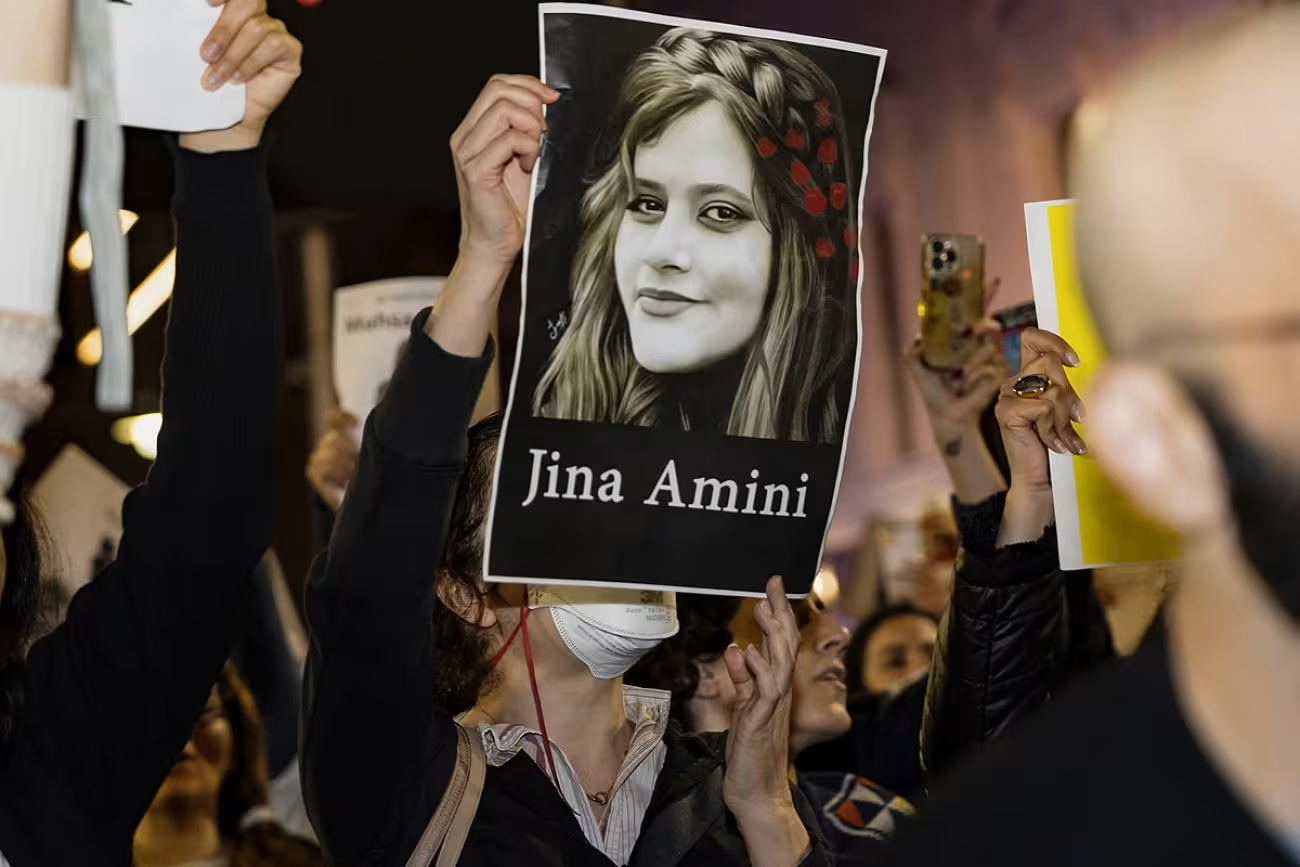
The death of Mahsa Jina Amini in Iranian police custody on September 16, 2022, triggered one of the largest protest movements in the history of the Islamic Republic. What began as public outrage over the death of a 22-year-old Kurdish Iranian woman quickly developed into nationwide demonstrations demanding women's rights, individual freedoms, and political change.
The movement became internationally recognized through the slogan "Woman, Life, Freedom," known in Persian as "Zan, Zendegi, Azadi" and in Kurdish as "Jin, Jiyan, Azadî."
Four years later, the movement remains an important symbol of resistance to compulsory hijab laws and gender discrimination, even as Iranian authorities continue to restrict demonstrations and prosecute activists.
Who Was Mahsa Jina Amini?
Mahsa Jina Amini was a 22-year-old Kurdish Iranian woman from Saqqez in Iran's Kurdistan province. She was visiting Tehran with her family when she was detained by the country's morality police on September 13, 2022.
Authorities accused her of violating Iran's mandatory dress code for women, reportedly because of the way she wore her hijab.
After being taken into custody, Amini collapsed and was transported to a hospital. She remained unconscious and died three days later, on September 16.
Iranian authorities initially attributed her death to medical causes and denied that police officers had physically abused her. However, her family disputed that explanation.
In March 2024, an independent United Nations fact-finding mission concluded that Amini's death was unlawful and resulted from physical violence while she was in state custody. The mission held Iranian authorities responsible.
How Did the Woman, Life, Freedom Protests Begin?
Public demonstrations began shortly after Amini's death, particularly in Tehran and her hometown of Saqqez.
During her funeral on September 17, 2022, mourners gathered to protest her death. Women removed their headscarves while demonstrators chanted "Jin, Jiyan, Azadî."
The demonstrations soon spread to cities throughout Iran, including Tehran, Mashhad, Isfahan, Shiraz, Sanandaj, and Zahedan.
Women and young people became particularly visible participants. University students, schoolgirls, workers, and other citizens joined demonstrations expressing frustration with restrictions on personal freedom and broader political conditions.
Although the protests began in response to Amini's death, they expanded into a wider movement addressing discrimination, state violence, economic grievances, and demands for political accountability.
What Does Zan, Zendegi, Azadi Mean?
"Zan, Zendegi, Azadi" translates from Persian as "Woman, Life, Freedom."
The slogan originated in the Kurdish women's liberation movement as "Jin, Jiyan, Azadî" and had been used by Kurdish activists long before the Iranian protests of 2022.
Its three central concepts express the movement's broader demands:
- Woman: Equality, bodily autonomy, and opposition to discrimination against women.
- Life: The right to live with dignity, security, and freedom from violence.
- Freedom: Individual liberties, political rights, and freedom from coercion.
The Kurdish slogan gained nationwide recognition after Amini's funeral and was subsequently adopted in Persian by protesters across Iran.
Its popularity also helped connect women's rights with broader demands for social and political change.
Why Did Iranian Women Remove Their Hijabs During the Protests?
Removing the hijab became one of the most recognizable acts of defiance during the demonstrations.
Since the establishment of the Islamic Republic, Iranian women have faced laws requiring them to cover their hair in public. Enforcement has involved morality police patrols, fines, detention, and other penalties.
For many protesters, removing or burning a headscarf symbolized opposition to compulsory veiling rather than opposition to women who voluntarily wear religious clothing.
Videos circulated internationally showing women removing their scarves, cutting their hair, and confronting restrictions on personal appearance.
These symbolic actions became central to the movement's global identity and contributed to international demonstrations of solidarity.
How Did the Iranian Government Respond?
Iranian security forces responded to the 2022 demonstrations with extensive arrests, restrictions on communications, and the use of force.
Human rights organizations documented the deaths of hundreds of protesters and bystanders, including children. Thousands of people were detained during the unrest.
Authorities also restricted internet access and disrupted social media services, complicating communication among demonstrators and limiting the flow of information.
The Iranian government characterized the unrest as a security threat and accused foreign governments and hostile organizations of encouraging instability.
However, international investigators documented serious violations by state authorities during the crackdown.
What Did the United Nations Investigation Find?
In March 2024, the United Nations Independent International Fact-Finding Mission on Iran concluded that Iranian authorities had committed serious human rights violations during the suppression of the Woman, Life, Freedom demonstrations.
The mission documented unlawful killings, arbitrary detention, torture, sexual violence, and persecution.
It concluded that some of these acts constituted crimes against humanity, including murder, imprisonment, torture, rape, and gender-based persecution.
The investigation also found that women, children, and members of ethnic minority communities were disproportionately affected by certain forms of violence and discrimination.
Iranian authorities rejected accusations of systematic wrongdoing and disputed international assessments of the protests.
Human rights organizations have continued demanding independent investigations and accountability for those responsible for abuses.
How the Protests Spread Beyond Iran
The Woman, Life, Freedom movement quickly gained international attention.
Demonstrations were organized in cities across Europe, North America, Australia, and other regions. Iranian diaspora communities played a major role in organizing events and raising awareness.
Protesters carried photographs of Mahsa Amini, displayed signs with the movement's slogan, and participated in symbolic hair-cutting demonstrations.
International celebrities, women's rights advocates, and political figures also expressed solidarity with Iranian women.
The movement became a widely recognized expression of the struggle for women's rights and civil liberties, extending its significance beyond Iran's borders.
What Happened to the Woman, Life, Freedom Movement After 2022?
Large-scale street demonstrations declined following the government's crackdown, but acts of resistance continued.
Some Iranian women increasingly appeared in public without headscarves despite the continuing legal requirement to wear them.
Authorities responded with surveillance, prosecutions, vehicle confiscations, and restrictions on businesses accused of failing to enforce compulsory hijab rules.
In 2024, the government introduced additional enforcement measures under a campaign known as the Noor Plan.
Human rights organizations reported continuing harassment of activists, victims' families, journalists, and women challenging mandatory veiling.
The movement's visible presence changed, but the underlying disputes over women's autonomy and state authority remained unresolved.
Woman, Life, Freedom in 2026: What Has Changed?
By the fourth anniversary of Amini's death in September 2026, the movement had produced lasting changes in public behavior, even though Iran's compulsory hijab requirements had not been abolished.
Reporting by Radio Free Europe/Radio Liberty and Deutsche Welle described growing numbers of women appearing without headscarves in public spaces, particularly in major cities.
However, the authorities continued to enforce restrictions and pursue women and activists who challenged compulsory veiling.
Iran's newer Hijab and Chastity law had been suspended but not repealed, according to Human Rights Watch's 2026 assessment.
In September 2026, Amnesty International published a major investigation documenting crimes against humanity committed during the 2022 crackdown and renewed its call for accountability.
The report highlighted unlawful killings, torture, enforced disappearances, sexual violence, and persecution associated with the uprising.
These findings reinforced the continuing legal and human rights significance of the 2022 protests, four years after they began.
Why Mahsa Amini's Legacy Still Matters
Mahsa Jina Amini became an internationally recognized symbol of the consequences of compulsory dress-code enforcement and the broader struggle for women's autonomy.
Her death brought renewed attention to longstanding concerns about gender discrimination, policing, minority rights, and political freedoms in Iran.
The movement also demonstrated how a slogan rooted in Kurdish women's activism could become a unifying message across different communities and national borders.
Although the immediate demonstrations were suppressed, Woman, Life, Freedom continued to influence public discussion, activism, and international human rights investigations.
Final Thoughts
The Woman, Life, Freedom movement began after Mahsa Jina Amini died in Iranian police custody on September 16, 2022. The demonstrations that followed transformed public outrage over her death into a nationwide movement demanding equality, individual freedoms, and political accountability.
Iranian authorities responded with a crackdown that United Nations investigators later found involved serious human rights violations and crimes against humanity.
Four years later, the movement's impact remains visible in the continued rejection of compulsory hijab rules by some Iranian women and ongoing international calls for justice.
The slogan "Zan, Zendegi, Azadi" continues to represent the demands for dignity, equality, and freedom that defined the 2022 protests.