
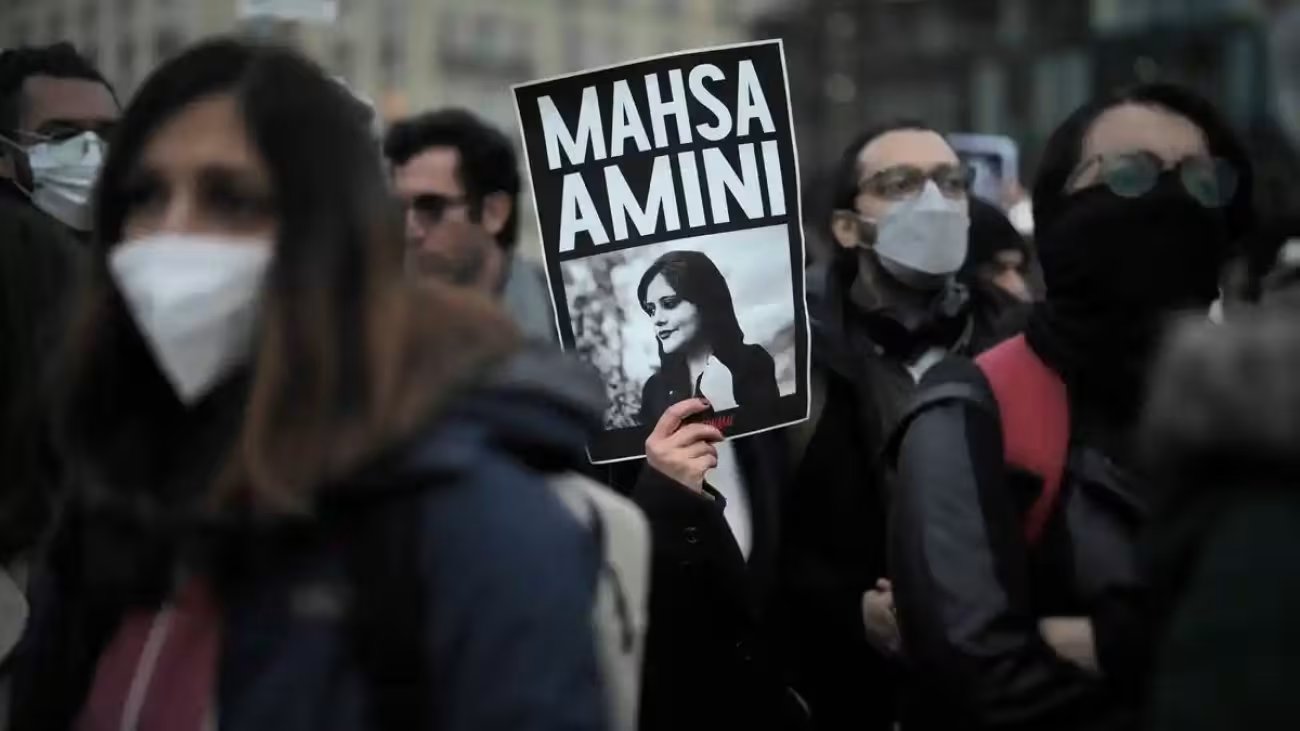
Iran imposed widespread internet restrictions following the death of Jina Mahsa Amini, a 22-year-old Kurdish Iranian woman who died in police custody on September 16, 2022. As protests spread across the country, authorities blocked WhatsApp and Instagram, disrupted mobile networks and restricted access to international online services. Independent researchers documented approximately 100 hours of mobile internet outages over 13 consecutive days. The restrictions complicated communication, business operations and independent reporting. Iran later imposed additional nationwide blackouts, including two major shutdowns in 2026. Although connectivity partially returned in late May 2026, international internet access remained heavily restricted.
Why Did the Mahsa Amini Protests Begin?
Mahsa Amini was detained in Tehran on September 13, 2022, by Iran's morality police over allegations that she violated mandatory hijab regulations.
She was hospitalized after her detention and died three days later.
Iranian authorities initially attributed her death to medical causes, while her family disputed that explanation.
In March 2024, a United Nations fact-finding mission concluded that her death was unlawful and resulted from physical violence while she was in state custody. Iran rejected the mission's conclusions.
Her death triggered demonstrations that developed into the Woman, Life, Freedom movement, raising demands concerning women's rights, personal freedoms and political accountability.
When Did Iran Begin Shutting Down the Internet?
Network monitoring organizations detected internet disruptions soon after demonstrations began.
NetBlocks recorded partial disruptions in Tehran on September 16, followed by a near-total outage in parts of Kurdistan province on September 19.
On September 21, Iranian internet providers began blocking WhatsApp and Instagram across numerous networks.
Authorities also restricted mobile data services, significantly disrupting communication in affected areas.
Technical researchers documented repeated daily mobile network shutdowns between September 21 and October 3, 2022.
These outages typically began around 4 p.m. local time and continued until approximately midnight.
The resulting interruptions amounted to roughly 100 hours over 13 consecutive days.
How Can Iran Shut Down Internet Access?
Iran controls internet connectivity through telecommunications regulation, domestic network infrastructure and restrictions imposed by major internet service providers.
These controls allow authorities to interfere with online access at several levels.
Mobile Network Shutdowns
Mobile operators can be required to suspend or restrict data connectivity across particular regions or nationwide.
During the 2022 demonstrations, networks operated by Irancell, Rightel and MCCI experienced repeated disruptions.
Mobile outages were especially significant because many residents relied on cellular connections for communication and access to online information.
Social Media and Messaging Restrictions
Iran blocked WhatsApp and Instagram on numerous networks beginning September 21, 2022.
These services had been among the remaining widely accessible international communication platforms in the country.
Other services, including Facebook, Telegram and YouTube, had already faced extensive restrictions before the protests.
DNS and Connection Filtering
The Open Observatory of Network Interference (OONI) documented multiple blocking techniques, including DNS interference, TCP/IP blocking and disruption of encrypted connections.
Iranian providers also restricted access to Google Play and Apple's App Store, complicating efforts to install applications and certain censorship-circumvention tools.
International Internet Disconnection
During more extensive shutdowns, authorities can sharply reduce traffic between Iranian networks and the global internet.
Such restrictions are more severe than blocking individual websites because they affect access to entire categories of international services.
However, a national shutdown does not necessarily mean every domestic website or telecommunications connection becomes unavailable.
What Is Iran's National Information Network?
Iran's National Information Network is a domestic communications infrastructure designed to support locally hosted websites, banking systems, government platforms and other digital services.
It can allow certain domestic services to continue functioning while international connectivity is restricted.
The availability of those services varies according to the severity and technical implementation of each shutdown.
Freedom House's 2026 assessment describes an increasingly tiered internet system in which some users receive more extensive access while many others face costly and heavily restricted international connections.
Can VPNs Bypass Iran's Internet Restrictions?
Virtual private networks can sometimes bypass website or application filtering when an underlying internet connection remains available.
However, VPNs cannot reliably restore service when mobile data or international connectivity has been disabled at the network level.
During the 2022 protests, OONI observed that some circumvention tools remained intermittently functional, while others were affected by increasingly sophisticated filtering.
Satellite connectivity has also offered an alternative for some users, although access depends on equipment availability, technical conditions and regulatory restrictions.
How Did the Shutdown Affect Iranian Citizens?
The restrictions affected far more than protest-related communication.
Residents experienced difficulty contacting family members, receiving news and using international online services.
Businesses dependent on social media and electronic commerce faced interruptions to customer communications and transactions.
Journalists and human rights organizations also encountered obstacles when attempting to verify events and obtain footage from affected areas.
Iranian authorities defended internet controls using public order and security arguments. Human rights organizations criticized the shutdowns for restricting expression, access to information and peaceful assembly.
What Did the United Nations Find About the Protests?
In March 2024, a United Nations independent international fact-finding mission published findings about Amini's death and the authorities' response to the subsequent protests.
The mission documented unlawful killings, arbitrary detention, torture and sexual violence.
It concluded that certain violations amounted to crimes against humanity because they formed part of a widespread and systematic attack against civilian protesters.
Iran disputed the findings and rejected the mission's legitimacy.
The investigation became an important source for understanding the human rights consequences of the demonstrations and the restrictions imposed during them.
Iran's Internet Shutdowns in 2025 and 2026
Internet restrictions continued after the 2022 protests, particularly during periods of political unrest and military conflict.
June 2025 Restrictions
Iran experienced significant internet disruptions during its 12-day military conflict with Israel in June 2025.
Cloudflare and other network monitors documented sharp reductions in connectivity, demonstrating that nationwide internet restrictions were not limited to domestic protests.
January 2026 Nationwide Blackout
A new nationwide shutdown began on January 8, 2026, amid widespread demonstrations.
Cloudflare Radar observed internet traffic falling to effectively zero.
Connectivity returned unevenly during late January, with a more substantial recovery beginning around January 27.
Even after traffic increased, filtering and access restrictions remained significant.
February–May 2026 Shutdown
On February 28, 2026, another nationwide internet shutdown began amid military hostilities involving Iran, Israel and the United States.
Cloudflare recorded traffic falling to less than 1% of previously observed levels.
The disruption continued for approximately 88 days.
On May 26, Iranian officials announced that connectivity was beginning to return.
Cloudflare confirmed partial restoration, observing traffic reaching approximately 40% of an earlier 2026 reference level during the initial recovery.
Subsequent monitoring showed additional improvement, but international access did not immediately return to unrestricted normal operation.
Iran Internet Shutdown Timeline
| Date | Confirmed Development |
|---|---|
| November 2019 | Iran imposes a major nationwide shutdown during fuel-price protests. |
| September 16, 2022 | Mahsa Amini dies in police custody; demonstrations spread. |
| September 19, 2022 | Major disruptions are documented in parts of Kurdistan province. |
| September 21, 2022 | WhatsApp and Instagram blocking intensifies alongside mobile outages. |
| September 21–October 3, 2022 | Repeated mobile shutdowns cause approximately 100 hours of disruption. |
| March 2024 | UN investigators publish findings concerning Amini's death and protest-related violations. |
| June 2025 | Internet restrictions intensify during the Iran-Israel conflict. |
| January 8, 2026 | A new nationwide internet blackout begins during protests. |
| Late January 2026 | Partial restoration follows the January shutdown. |
| February 28, 2026 | A second major nationwide blackout begins. |
| May 26–27, 2026 | Network monitoring confirms partial restoration after approximately 88 days. |
Can Iran Completely Disconnect From the Global Internet?
Iran has demonstrated the technical capacity to impose near-total restrictions on international connectivity across major telecommunications networks.
During severe shutdowns, network monitoring has recorded traffic falling to a fraction of ordinary levels.
However, a near-total blackout is not necessarily identical to every connection being physically disconnected.
Some domestic services, selected institutions or alternative connections may continue functioning.
The distinction matters because internet restrictions can range from blocking individual applications to disabling mobile networks or severely limiting international connectivity across the country.
Latest Internet Freedom Assessment in 2026
Freedom House's Freedom on the Net 2026 report rated Iran's internet environment as Not Free, assigning it 9 out of 100 points, down from 13 in the previous assessment.
The report cited extensive shutdowns, restricted international connectivity and a tiered access system as major concerns.
The findings reflect internet freedom conditions over the report's assessment period, rather than a live measurement of whether every Iranian network is functioning on a particular day.
As of November 11, 2026, the verified evidence supports describing Iran's international internet access as heavily restricted, not asserting that every connection remains completely offline.
Conclusion
Iran responded to the protests following Jina Mahsa Amini's death in September 2022 with extensive digital restrictions, including social media blocking and repeated mobile internet shutdowns.
Independent researchers documented approximately 100 hours of mobile disruptions across 13 days, limiting communication and the flow of information during nationwide demonstrations.
Further blackouts in January and February 2026 demonstrated that authorities retained the ability to impose severe restrictions on international connectivity.
Although internet service partially recovered in late May 2026, major limitations remained.
The events illustrate how control over telecommunications infrastructure can allow governments to restrict digital communication during political unrest and conflict, with consequences for businesses, families, journalists and the wider population.