
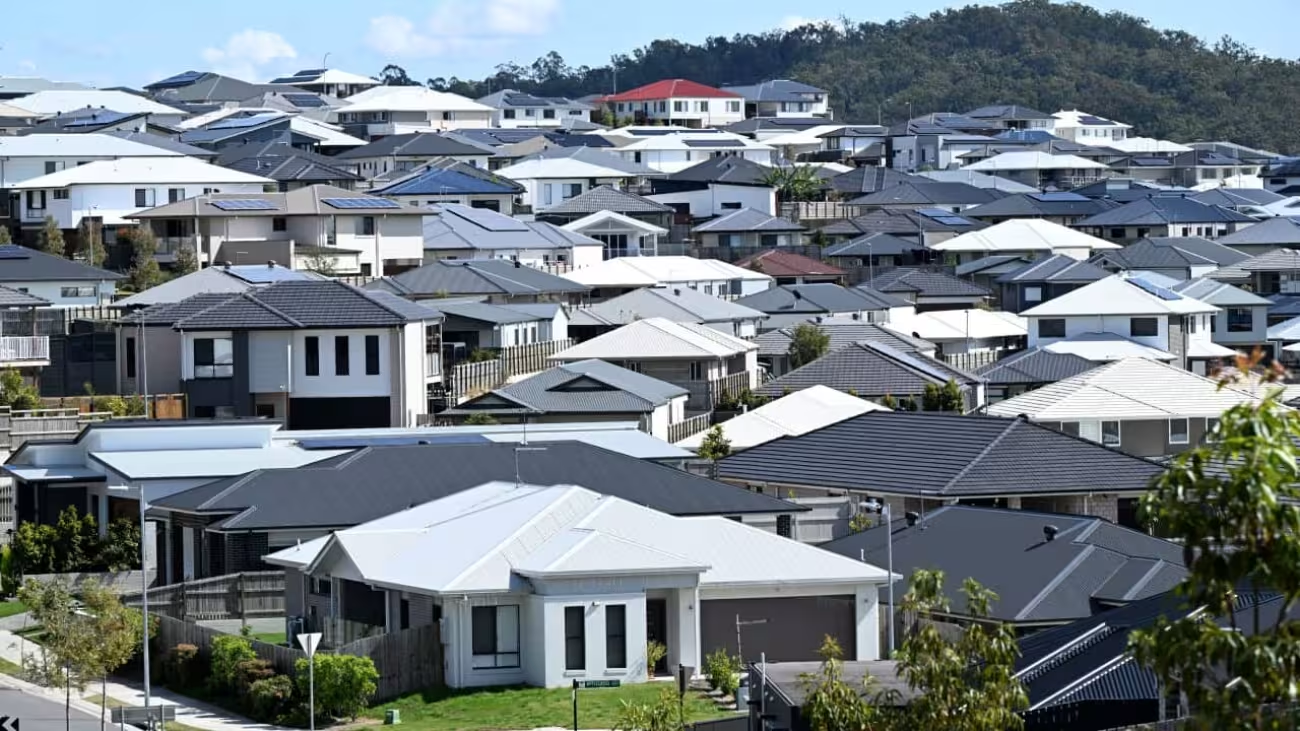
Australia's housing market is facing a significant affordability crisis as property prices, mortgage repayments, and rental costs continue to put pressure on household budgets. For younger Australians and first-time buyers, purchasing a home has become increasingly difficult, with many taking longer to save deposits or postponing home ownership altogether.
However, the latest market developments in November 2026 reveal a significant change in the outlook. After several years of rising property values, Australia's housing market has entered a substantial downturn. Property valuers are increasingly predicting further price declines rather than the continued increases that dominated earlier market forecasts.
A September 2026 survey by CBRE found that almost two-thirds of residential valuers expected Australian house and apartment prices to decline over the following 12 months. Meanwhile, Cotality reported that mortgage repayments on a median-priced Australian home still consumed 49.5% of median household income, despite falling property values.
The situation highlights a central problem in Australia's housing market: falling property prices do not necessarily make home ownership affordable when borrowing costs remain high and household incomes struggle to keep pace with housing expenses.
Are Australian Property Prices Expected to Increase Further?
Earlier Australian property market forecasts frequently anticipated continued price increases, supported by population growth, housing shortages, and strong demand from investors and owner-occupiers.
However, the outlook changed considerably during 2026 as interest rates increased, borrowing capacity declined, and housing demand weakened.
According to CBRE's Residential Valuer Insights Q3 2026 report, based on responses from 169 residential valuers surveyed across Australia, expectations for property prices shifted into negative territory.
| Property Type | Valuers Expecting Price Declines | Expected Outlook |
|---|---|---|
| Houses | Approximately 62% | 36% expect declines of up to 5%; 26% expect declines of 5–10% |
| Apartments | Approximately 60% | 29% expect declines of up to 5%; 31% expect declines of 5–10% |
| Vacant Land | 41% | 40% expect stable values; 18% expect increases |
These forecasts cover the 12 months to the third quarter of 2027. They represent the opinions of surveyed property valuers rather than guaranteed market outcomes.
The findings are particularly significant because they mark the first time since CBRE began its survey in 2024 that a majority of respondents expected both house and apartment prices to fall.
Demand has also weakened. In the third quarter of 2026, 56% of surveyed valuers described conditions in their local markets as soft or very limited. A further 41% expected demand to decline over the following 12 months.
These findings suggest that the Australian housing market is moving away from the strong seller-driven conditions experienced during previous periods of rapid price growth.
Why Are Australians Giving Up on Home Ownership?
Housing affordability has become one of Australia's most significant economic and social challenges. Although home ownership remains an important financial goal for many households, the cost of purchasing a property has increasingly exceeded what ordinary workers can comfortably afford.
Several factors explain why more Australians are delaying home purchases or remaining in the rental market.
1. Property Prices Have Increased Faster Than Incomes
One of the biggest barriers is the growing gap between property values and household earnings.
According to Cotality's September 2026 Housing Affordability Report, the median Australian dwelling increased in value by 33% over the previous five years. During the same period, median household income increased by only 21.6%.
The difference means prospective buyers need substantially more money to purchase a property, even if their earnings have increased.
By September 2026, the national dwelling value-to-income ratio had reached 8.2, meaning the median dwelling was worth approximately 8.2 times median annual household income.
2. Mortgage Interest Rates Have Reduced Borrowing Capacity
Higher interest rates have made purchasing property more expensive by increasing monthly repayments and reducing the amount banks are willing to lend.
In November 2026, the Reserve Bank of Australia raised its cash rate by another 0.25 percentage points to 4.85%, its fifth increase of the year.
The higher cash rate has placed additional pressure on borrowers already dealing with elevated living expenses, insurance premiums, electricity bills, and other household costs.
According to the Reserve Bank, Australia's established housing market weakened more than expected during 2026, with higher interest rates and changes to property investment taxation contributing to lower housing demand.
3. Saving for a Deposit Takes Longer
Even Australians with stable employment and reasonable incomes can struggle to accumulate enough money for a home deposit.
Cotality estimated that a typical Australian household needed approximately 10.9 years to save a 20% deposit for a median-priced property as of September 2026, assuming it could save 15% of annual household income.
Although this was an improvement from the record estimate of 11.6 years in March, the figure remained among the highest recorded in the report's history.
For renters, the challenge is particularly difficult because rising accommodation expenses leave less disposable income available for savings.
4. Renting Is Becoming More Expensive
Renting has not necessarily become an affordable alternative to purchasing a property.
Over the five years to September 2026, Australian rents increased by 49.4%, considerably faster than median household income growth.
Cotality estimated that median rent absorbed 33.7% of household income nationally during September, close to the record level recorded earlier in the year.
This creates a difficult financial situation for prospective buyers. They face expensive rents while attempting to save for a deposit, making it increasingly difficult to transition from renting to home ownership.
Australian Home Ownership Rates Are Declining Among Younger Generations
The affordability crisis is reflected in Australia's long-term home ownership statistics.
According to the Australian Bureau of Statistics (ABS), younger generations are less likely to own a home than previous generations were at the same age.
Its comparison of the 2021 Census with earlier generations found that approximately 54.6% of Millennials aged 25–39 owned their homes, compared with 62.1% of Generation X and 65.8% of Baby Boomers when they were in the same age group.
| Generation | Home Ownership at Ages 25–39 |
|---|---|
| Baby Boomers (1991) | 65.8% |
| Generation X (2006) | 62.1% |
| Millennials (2021) | 54.6% |
The broader trend is also visible among individual age groups. AIHW analysis of Census data found that home ownership among Australians aged 25–29 declined from 50% in 1971 to 36% in 2021. For those aged 30–34, ownership fell from 64% to 50%.
Overall Australian household home ownership stood at approximately 67% in the 2021 Census, compared with 70% in 2006.
These figures should not be interpreted as evidence that Australians are abandoning home ownership altogether. Rather, they demonstrate that younger households are finding it increasingly difficult to enter the property market.
The 2021 Census remains the latest comprehensive source for detailed home ownership comparisons by age group. Results from the 2026 Census have not yet been released.
Australian Property Prices Are Falling in 2026
Despite long-term concerns about housing shortages and rising property costs, Australia's residential market experienced a significant correction during 2026.
Cotality's November Home Value Index reported that national dwelling values fell for seven consecutive months through October. The national index declined by 1.2% during October alone and stood approximately 6.7% below its March 2026 peak.
NAB's November Housing Monitor, using Cotality data, reported that combined capital city dwelling values were 8.1% below their March peak.
The decline has not affected every Australian city equally.
Property Price Changes Across Australian Cities
The following figures show annual dwelling value movements through October 2026.
| City | Annual Price Change | October Monthly Change |
|---|---|---|
| Sydney | -9.4% | -1.6% |
| Melbourne | -7.6% | -0.8% |
| Brisbane | +0.4% | -2.0% |
| Perth | +3.9% | -1.7% |
| Adelaide | +3.7% | -1.2% |
| Hobart | +5.5% | +0.5% |
| Darwin | +9.7% | +0.6% |
Source: NAB November 2026 Housing Monitor, drawing on Cotality's Home Value Index.
The figures demonstrate why it is misleading to describe the entire Australian property market as experiencing the same conditions. Sydney and Melbourne have recorded substantial annual declines, while several other cities still had positive annual growth despite falling prices during October.
How Much Further Could Australian Property Prices Fall?
Several major financial institutions expect the housing downturn to continue into 2027.
In its November 2026 Housing Monitor, NAB revised its forecast for combined capital city dwelling values to a peak-to-trough decline of approximately 14%, compared with its previous estimate of 11%.
The bank expects prices to find a floor around the second quarter of 2027.
| Market | 2026 Forecast | 2027 Forecast |
|---|---|---|
| Sydney | -13% | -4% |
| Melbourne | -9% | -1% |
| Brisbane | -7% | -4% |
| Perth | -4% | -2% |
| Adelaide | -2% | -2% |
| Hobart | +3% | +1% |
| Combined Capitals | -9% | -3% |
These are NAB's year-ended dwelling price forecasts, not guaranteed outcomes or predictions shared by every property research organisation.
The National Australia Bank's outlook reflects higher borrowing costs, reduced investor demand, weaker household confidence, and the impact of recent property taxation changes.
However, the bank also expects housing conditions to stabilise eventually. This suggests that the current downturn may represent a market correction rather than the beginning of a permanent collapse in Australian property values.
Why Are Property Investors Leaving the Australian Housing Market?
Another important development is the reduction in property investment activity.
Investors have historically played a significant role in Australia's housing market, purchasing properties for rental income and long-term capital appreciation. However, higher borrowing costs and changes to taxation have made some investment opportunities less attractive.
CBRE's Q3 2026 survey found that local and interstate investors recorded their lowest activity levels since the research began in 2024.
The survey identified changes to Capital Gains Tax (CGT) and Negative Gearing as major influences on market conditions.
Capital Gains Tax Changes
Capital Gains Tax applies to profits made when an investment asset, including an investment property, is sold.
Changes to the tax treatment of capital gains can influence how investors calculate the potential returns from purchasing and holding residential property.
According to CBRE, 83% of surveyed valuers expected the announced CGT changes to put downward pressure on residential property prices over the following 12 months.
Negative Gearing Changes
Negative gearing allows eligible property investors to deduct certain rental property expenses against their taxable income when those expenses exceed rental income, subject to applicable tax rules.
Changes to these arrangements can influence investment decisions by reducing the tax advantages associated with holding rental properties.
CBRE found that 80% of surveyed valuers expected the announced negative gearing changes to place downward pressure on property prices over the following 12 months.
These are survey respondents' expectations rather than proof that the tax changes alone will determine future property prices.
Could Falling Property Prices Eventually Make Home Ownership Affordable?
Falling property values can create opportunities for first-time buyers, particularly those who have already accumulated a deposit and have sufficient borrowing capacity.
However, lower prices do not automatically translate into affordable home ownership.
For example, a property that becomes 10% cheaper may still be difficult to purchase if mortgage interest rates rise substantially during the same period.
Cotality's September 2026 affordability report illustrates this problem. Mortgage repayments on a median-priced Australian dwelling still required 49.5% of median household income, despite a decline from the record 50.6% recorded in June.
The 20-year average for this measure is approximately 34.8%, showing how far current mortgage affordability remains from historical norms.
First-Time Buyers Are Still Active
Interestingly, first-home buyers have not disappeared from the market.
CBRE's Q3 2026 survey identified first-home buyers as the most active buyer group, with 78% of valuers reporting activity from this category.
This suggests that some buyers are using the weaker market conditions to negotiate prices and search for properties that were previously beyond their budgets.
However, the ability to secure financing remains a major obstacle, particularly for households without substantial savings or financial support.
Will Australian Property Prices Rise Again in the Future?
Although the immediate outlook is negative, several structural factors could support property price growth over the longer term.
Housing Supply Shortages
Australia continues to face challenges in delivering enough housing to meet population and household demand.
Construction costs, labour shortages, planning restrictions, infrastructure requirements, and development financing can all delay new housing projects.
When housing construction fails to keep pace with demand, the resulting supply imbalance can place upward pressure on prices and rents.
Population Growth
Population growth also contributes to long-term housing demand. More residents require accommodation, particularly in major employment centres and cities with strong economic opportunities.
However, population growth does not automatically guarantee higher property prices. The outcome depends on the availability of housing, employment conditions, borrowing capacity, and the distribution of new residents across different regions.
Interest Rates and Buyer Confidence
Interest rates will remain an important factor in determining when Australia's property market stabilises.
Higher borrowing costs reduce purchasing power, while lower rates can make mortgages more affordable and encourage buyers to return.
NAB's November 2026 economic outlook expected the Reserve Bank to maintain its 4.85% cash rate until August 2027, when it forecast that gradual rate reductions could begin, provided inflation moderates.
If borrowing conditions eventually improve while housing supply remains constrained, property prices could return to growth.
However, the timing and strength of any recovery remain uncertain.
Conclusion
Australia's housing market is experiencing a significant shift as affordability pressures prevent many younger households from purchasing their first homes.
Although home ownership has declined across successive generations, the latest available Census data shows that the problem is particularly pronounced among Australians aged 25–39.
At the same time, property valuers are increasingly predicting price declines rather than further increases. CBRE's Q3 2026 survey found that almost two-thirds expected house and apartment prices to fall over the following 12 months, while NAB forecast a 14% peak-to-trough decline across the combined capital cities.
Nevertheless, falling prices have not solved Australia's housing affordability problem. Higher mortgage rates, expensive rents, and lengthy deposit-saving periods continue to prevent many households from entering the market.
The longer-term outlook will depend on whether Australia can increase housing supply, improve borrowing affordability, and ensure household incomes grow faster than housing costs. Without meaningful improvements in these areas, home ownership is likely to remain increasingly difficult for younger generations, even if property prices eventually begin rising again.