
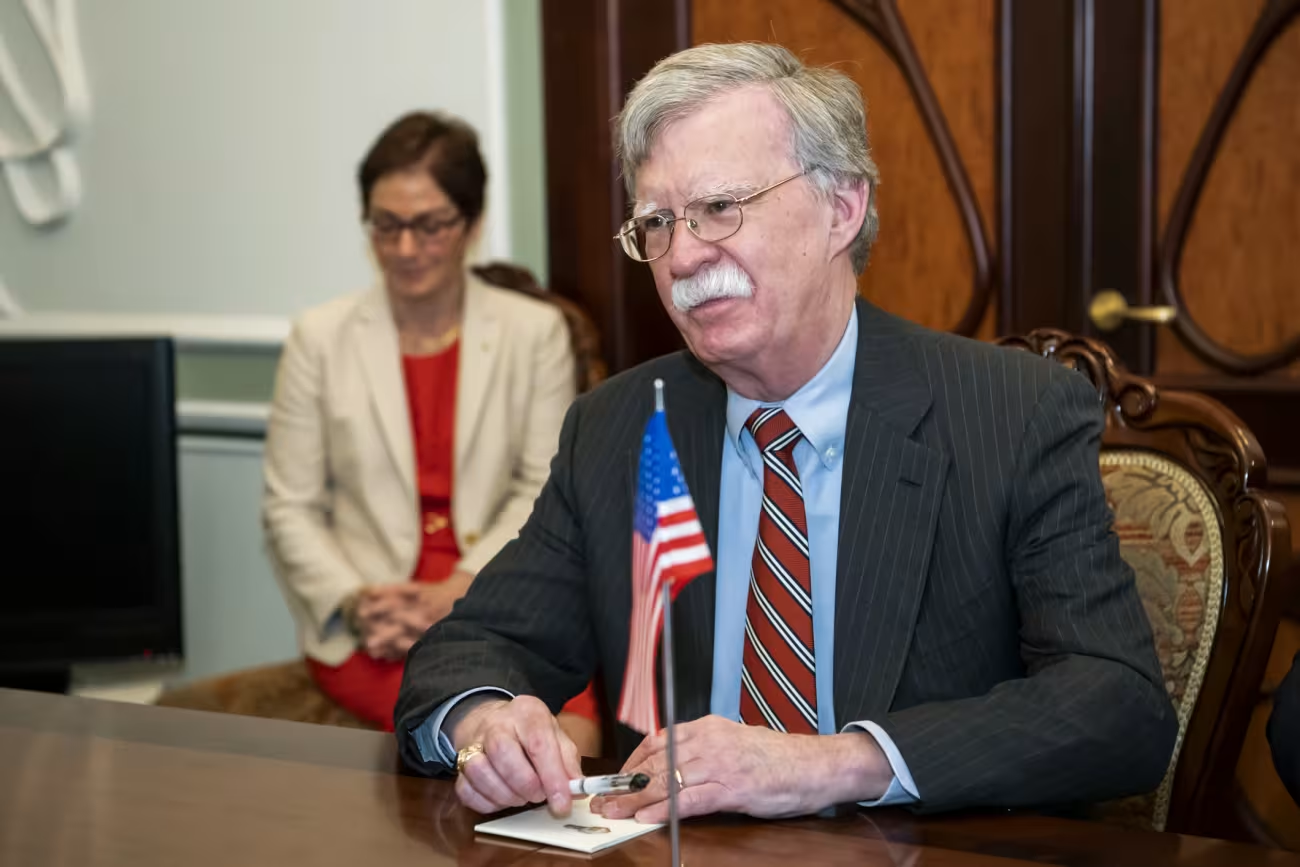
Former US National Security Adviser John Bolton became the subject of a major national security prosecution after a federal grand jury indicted him on 18 counts involving the alleged unlawful transmission and retention of classified government information.
The indictment, filed on October 16, 2025, accused Bolton of using personal email accounts and messaging applications to share sensitive national defence information with two family members who were not authorized to access classified material. Prosecutors also alleged that he retained classified documents and personal notes at his Maryland residence after leaving government service.
The case attracted additional attention because investigators alleged that a personal email account used to transmit the information was subsequently hacked by a cyber actor believed to be associated with Iran.
However, the case has since reached an important development. On June 26, 2026, Bolton pleaded guilty to one felony count of willfully retaining national defence information. His plea agreement resolved all 18 original charges, and his sentencing is scheduled for December 4, 2026.
Why Was John Bolton Indicted?
John Bolton was indicted by a federal grand jury in the District of Maryland on October 16, 2025.
The prosecution alleged that Bolton had mishandled classified national defence information during and after his service as national security adviser to President Donald Trump between April 2018 and September 2019.
According to the indictment, Bolton created extensive personal diary-style records documenting his daily activities, meetings, intelligence briefings, and conversations with government officials and foreign leaders.
Some of these records allegedly contained information classified at the Secret, Top Secret, and Sensitive Compartmented Information (SCI) levels.
Prosecutors claimed that Bolton transmitted more than 1,000 pages of these records to two unauthorized recipients using personal email accounts and a non-government messaging application.
The indictment also alleged that he retained additional documents, notes, and electronic copies containing national defence information at his home in Bethesda, Maryland.
What Are the 18 Espionage Act Charges Against John Bolton?
The 18-count indictment was brought under the Espionage Act, specifically provisions of the US Code dealing with the unauthorized transmission and retention of national defence information.
The charges were divided into two principal categories.
Eight Counts of Unlawful Transmission of National Defence Information
Counts 1 through 8 alleged violations of 18 U.S.C. Section 793(d), which concerns the unauthorized transmission of national defence information by individuals entrusted with such material.
Prosecutors alleged that Bolton transmitted eight documents containing sensitive government information to two individuals who did not possess the necessary security authorization.
The alleged transmissions involved personal email accounts and messaging applications that were not approved for handling classified information.
Ten Counts of Unlawful Retention of National Defence Information
Counts 9 through 18 alleged violations of 18 U.S.C. Section 793(e), which addresses the unauthorized retention of national defence information.
These allegations concerned documents, diary entries, written notes, and electronic records containing classified information that Bolton allegedly kept outside approved government facilities.
According to prosecutors, some materials remained stored at his Maryland residence even after his access to secure government facilities had ended.
The distinction between transmission and retention was central to the prosecution because the government alleged two separate forms of mishandling: sharing classified material with unauthorized recipients and keeping sensitive information in locations where it was not permitted.
What Classified Information Did John Bolton Allegedly Share?
The indictment described the material as significantly more sensitive than ordinary government correspondence or personal notes.
According to the Department of Justice, Bolton's diary-style documents contained information obtained through his official responsibilities as national security adviser.
The material allegedly included:
- Foreign military operations: Sensitive intelligence concerning military plans and activities of foreign adversaries.
- Covert US government operations: Information about classified American activities conducted in foreign countries.
- Human intelligence: Intelligence about foreign leaders obtained through clandestine human sources.
- Intercepted communications: Information derived from intelligence collection involving foreign communications.
- National security assessments: Sensitive information obtained through intelligence briefings and discussions with senior government officials.
Some of the information was reportedly classified at the Top Secret and SCI levels, indicating that unauthorized disclosure could potentially expose intelligence sources, collection methods, and sensitive government operations.
The government maintained that Bolton understood his responsibilities as a former holder of security clearance and knew that these materials could not be freely transferred to personal accounts or unauthorized individuals.
Why Did John Bolton Send Classified Information to Family Members?
According to the indictment, Bolton sent his personal diary-style records to two family members who were not authorized to receive classified information.
Although the indictment identified the recipients as Individual 1 and Individual 2, reporting by ABC News indicated that they were believed to be his wife and daughter.
The records reportedly documented his activities during his time in the Trump administration and included information from intelligence briefings, official meetings, and discussions with foreign representatives.
The material was allegedly shared in connection with his efforts to document his experiences in government and prepare written accounts of his national security work.
Bolton previously published his memoir, The Room Where It Happened: A White House Memoir, in 2020, describing his experience serving in the first Trump administration.
However, prosecutors stated during the guilty plea proceedings that the classified information involved in the criminal case was not published in that book. The prosecution concerned the alleged transmission and retention of information through personal accounts and devices, not a finding that the published memoir itself contained classified material.
How Did an Iranian-Linked Hacker Access Bolton's Personal Email?
One of the most serious aspects of the investigation involved an alleged cyberattack against Bolton's personal email account.
According to court documents, after Bolton left the White House in September 2019, a cyber actor believed to be associated with the Islamic Republic of Iran gained unauthorized access to his personal email account.
The account allegedly contained copies of national defence information that Bolton had previously transmitted to unauthorized recipients.
Investigators said the breach created an opportunity for a foreign adversary to access sensitive government material outside the United States' protected information systems.
Bolton reportedly notified law enforcement about the hacking incident in July 2021. However, prosecutors alleged that he did not inform investigators that the compromised account contained national defence information.
This omission became an important part of the government's case because the alleged breach potentially exposed sensitive intelligence to an unauthorized foreign actor.
The Department of Justice subsequently described the incident as a situation in which the risks associated with mishandling classified information had materialized.
It is important to distinguish the alleged Iranian cyberattack from the criminal conduct Bolton admitted. His guilty plea concerned willful retention of national defence information, while the government described the Iranian-linked intrusion as a separate security consequence of the mishandling.
FBI Searches John Bolton's Home and Office
The investigation became public in August 2025 when FBI agents searched Bolton's residence in Bethesda, Maryland, and his office in Washington, DC.
The searches were part of a federal investigation into whether Bolton had unlawfully retained classified government information after leaving public office.
Investigators examined electronic devices, personal records, and other materials potentially containing sensitive national security information.
The searches preceded the October 2025 indictment and demonstrated that the investigation had been underway before the charges were formally announced.
Bolton subsequently retained prominent defense attorney Abbe Lowell to represent him in the federal proceedings.
John Bolton Initially Pleaded Not Guilty
Following the indictment, Bolton appeared before a federal court in Maryland on October 17, 2025, and entered a not-guilty plea to all 18 counts.
He strongly rejected the suggestion that he had deliberately compromised American national security.
In his public response, Bolton described the prosecution as part of what he characterized as President Donald Trump's campaign of political retaliation against former officials who had criticized him.
Bolton had become one of Trump's most outspoken critics after leaving the administration. His 2020 memoir included highly critical accounts of the former president's approach to foreign policy and national security.
He said he had devoted decades of his life to American foreign policy and national security and intended to defend his conduct in court.
His defense also raised questions about the government's handling of classified information and the broader political context surrounding the investigation.
John Bolton Pleads Guilty in June 2026
The case took a major turn on June 26, 2026, when Bolton appeared before US District Judge Theodore D. Chuang in Greenbelt, Maryland, and pleaded guilty to one felony count of willfully retaining national defence information.
The guilty plea concerned Count 12 of the original indictment.
During the hearing, Bolton acknowledged his responsibility and told the judge, "I'm sorry for it."
The plea agreement resolved all 18 original counts, replacing the prospect of a lengthy trial involving classified evidence with a negotiated resolution.
Under the agreement, the government limited the maximum prison sentence it would seek to 60 months, or five years. Bolton also agreed to pay a $2.25 million fine.
Other conditions included up to 100 hours of community service, cooperation in a debriefing with intelligence and Department of Justice officials, and the forfeiture of his federal retirement benefits.
The guilty plea was significant because it represented a formal admission of criminal responsibility rather than merely an allegation contained in an indictment.
How Much Prison Time Could John Bolton Face?
Although Bolton pleaded guilty, the final punishment remains subject to the sentencing decision of the federal judge.
Under the plea agreement, the government may seek a sentence of up to 60 months in prison.
The agreement also requires Bolton to pay a $2.25 million fine, with payment deadlines tied to the sentencing date.
His conviction also carries significant financial consequences because the agreement recognizes that federal law prohibits him or his survivors from collecting an applicable federal retirement annuity.
These consequences extend beyond imprisonment and could affect his long-term financial position.
John Bolton's Sentencing Rescheduled for December 4, 2026
Bolton's sentencing was originally scheduled for October 28, 2026. However, the hearing was subsequently postponed after a request to continue the sentencing proceedings.
According to the federal court docket, Judge Theodore D. Chuang rescheduled the hearing for December 4, 2026, at 9:30 a.m. in Greenbelt, Maryland.
Both the prosecution and defense submitted sentencing memoranda on October 30, 2026. The government also filed classified supplemental sentencing materials, while Bolton's defense submitted its own memorandum and supporting documents.
The submissions indicate that the sentencing process involves consideration of both classified national security evidence and arguments presented by the defense.
As of November 16, 2026, no final prison sentence had been announced.
Who Is John Bolton? His Career in American National Security
John Robert Bolton II is an American lawyer, diplomat, political commentator, and former senior government official known for his hardline approach to foreign policy.
He held several influential positions in Republican administrations and became one of the most recognizable figures in American national security policy.
Early Government Career
Bolton previously served in the US Department of Justice and the Department of State, holding senior positions involving legal affairs and international diplomacy.
He later became US ambassador to the United Nations under President George W. Bush, serving from 2005 to 2006.
His approach to international relations frequently emphasized American military strength, national sovereignty, and a confrontational position toward governments considered hostile to US interests.
National Security Adviser Under Donald Trump
Bolton became national security adviser in April 2018 during Trump's first presidential administration.
He served in the position until September 2019, when his departure followed disagreements with the president over foreign policy and national security decisions.
His tenure involved major international issues, including relations with Iran, North Korea, China, and Russia.
The Room Where It Happened and His Public Dispute With Trump
After leaving the administration, Bolton published The Room Where It Happened in June 2020.
The book described his experience inside the Trump White House and included criticism of the president's decision-making and foreign policy approach.
The publication generated significant controversy, particularly because the Trump administration attempted to prevent its release over concerns that it contained classified information.
The government ultimately did not establish in Bolton's 2026 guilty plea that classified information had been published in the memoir. The criminal conviction concerned his separate handling and retention of classified material.
Does the Bolton Case Prove Political Retaliation?
The prosecution attracted political controversy because Bolton was a prominent critic of Trump and the indictment came after the president returned to office in January 2025.
Bolton characterized the investigation as political retaliation, while the administration maintained that the prosecution concerned national security and the handling of classified information.
However, an important detail complicates the political narrative: the FBI investigation and the reported email breach predated Trump's second administration.
The case also involved allegations concerning the unauthorized transmission and retention of sensitive information, rather than simply Bolton's public criticism of the president.
Ultimately, the guilty plea established Bolton's criminal responsibility for the specific retention offense to which he admitted guilt. It does not independently resolve every political argument surrounding the investigation or establish that all the original allegations were separately proven at trial.
Conclusion
John Bolton's prosecution began with an 18-count Espionage Act indictment filed in October 2025, accusing the former national security adviser of transmitting classified information to unauthorized family members and retaining sensitive government material outside approved facilities.
The case became especially serious after investigators alleged that his personal email account had been hacked by an Iranian-linked cyber actor, potentially exposing classified information to a foreign adversary.
Bolton initially pleaded not guilty and described the prosecution as political retaliation. However, on June 26, 2026, he pleaded guilty to one felony count of willfully retaining national defence information, resolving all 18 original counts through a plea agreement.
He faces a negotiated maximum prison sentence of five years, a $2.25 million fine, community service obligations, and the loss of applicable federal retirement benefits.
His sentencing, originally scheduled for October 28, has been postponed until December 4, 2026.
The case is significant not only because of Bolton's former position but also because it demonstrates the national security risks associated with storing or transmitting classified government information through personal communication systems.