

Captured Indian Student Exposes Russia’s Penal Recruitment Tactics: Sahil Majothi Case Sparks Diplomatic Firestorm
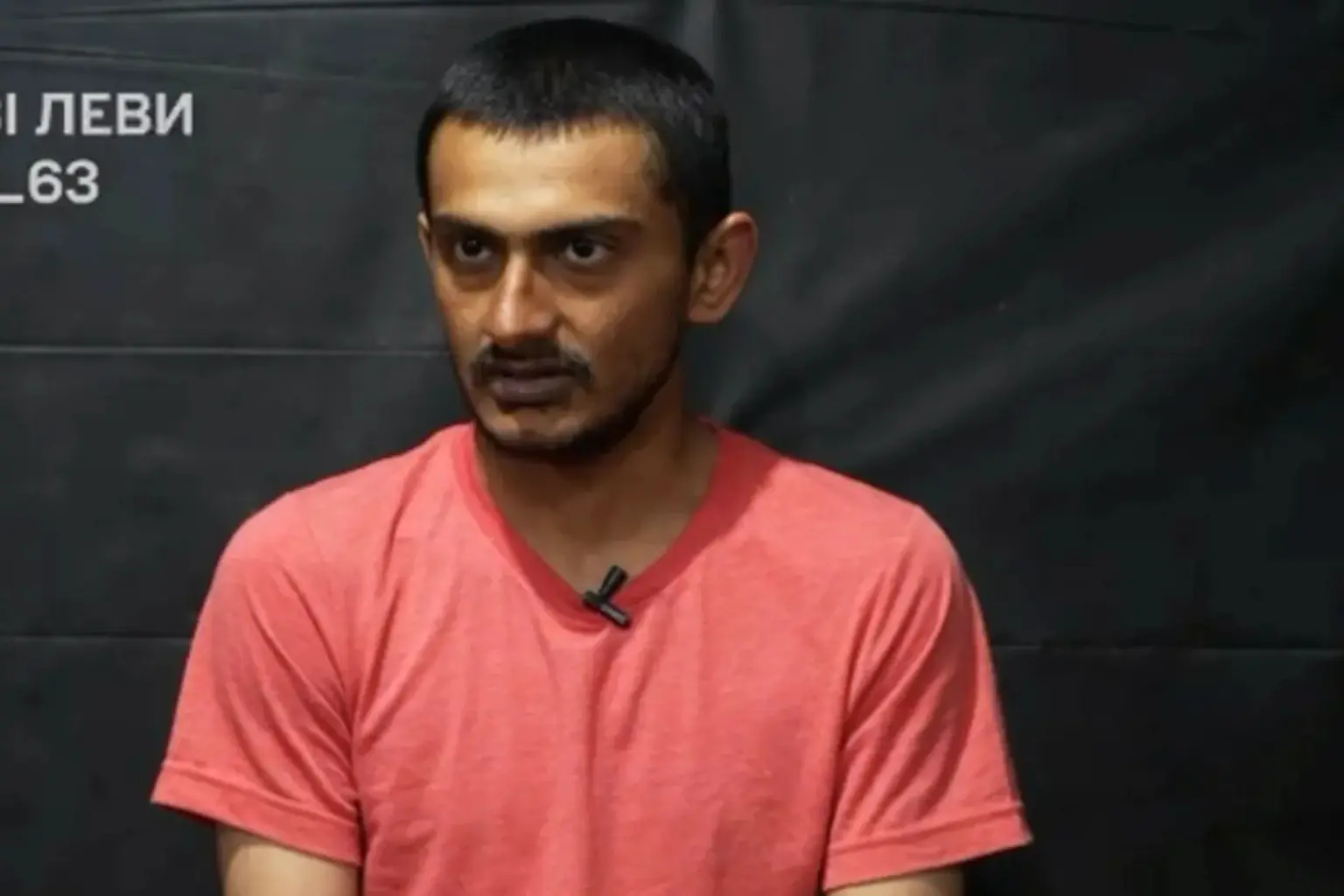
The viral video of 22-year-old Indian student Sahil Majothi, captured by Ukraine’s 63rd Mechanized Brigade, has torn the veil off one of Russia’s most sinister wartime tactics—turning its penal system into a recruitment pipeline for foreign manpower. Majothi’s on-camera confession, detailing how he was coerced into choosing combat on the Ukrainian front over a seven-year prison sentence after being allegedly framed in a Moscow drug case, exposes a state-sanctioned machinery of judicial extortion designed to feed the Kremlin’s war effort. The revelation has ignited a diplomatic firestorm in New Delhi, forcing India to confront the brutal intersection of its strategic neutrality and citizen safety, while Ukraine leverages the episode as a potent weapon of information warfare—embarrassing Moscow, destabilizing an ally’s domestic politics, and revealing the dark economy of coercion now underpinning Russia’s military survival.
I. Introduction: The Viral Face of Russia’s Penal Frontline
The recent viral video featuring 22-year-old Sahil Majothi from Gujarat, India, captured by Ukraine’s 63rd Mechanized Brigade, has violently exposed a dark and systemic tactic employed by the Russian Federation in its ongoing conflict: leveraging its domestic penal system to procure desperate, disposable foreign manpower.
Majothi’s appearance in the video, posted this week, serves as irrefutable evidence of a grave crisis that the Indian government has been attempting to quietly manage through high-level diplomatic channels. The captured Indian national claimed he was offered a chilling choice: military service on the perilous Ukrainian front or serving a seven-year prison sentence in Russia, which he received after being allegedly framed in a drug case last April.
The narrative emerging from this incident—of a vulnerable foreign student trading a lengthy incarceration for immediate combat deployment—transcends individual tragedy. It stands as a critical, public-facing example of Russia’s calculated policy to externalize its severe manpower deficiencies by utilizing judicial coercion against vulnerable non-citizen residents. This incident has simultaneously ignited a severe diplomatic crisis for New Delhi, challenging its strategic neutrality and placing the Indian government under immense domestic pressure to protect its vast diaspora.
The decision by Ukraine’s 63rd Brigade to release Majothi's testimony publicly is a strategic move in information warfare. By deliberately featuring a national from Moscow’s key non-Western ally, Kyiv aims to embarrass the Kremlin and potentially destabilize Indian domestic politics by highlighting the human cost of Russia’s war for Indian families. Furthermore, Majothi’s profile—a student who supported himself part-time as a kitchenware courier—signals a critical expansion in Russian recruitment targets, suggesting that authorities are deploying a broad net, targeting any foreign national who can be framed or coerced, demonstrating a shift from purely financial lures to reliance on legal and punitive compulsion.
II. The Indictment and the Inducement: Sahil Majothi’s Road to the Front
The Student, the Courier, and the Frame-up
Sahil Majothi’s journey to the front began not in military barracks but in the precarious environment of student life. The 22-year-old, a student from Morbi in Gujarat, traveled to Russia in January 2024 with the intention of studying computer engineering. After completing an initial three-month language course, he relocated to Moscow for college, where he worked part-time as a kitchenware courier to support himself financially.
This precarious existence led to his arrest in April 2024 for an alleged drug case. His mother vehemently insists her son was falsely accused, claiming that during one of his deliveries, someone slipped drugs into a parcel handed to him, leading to his capture and charging by police. Russia’s Federal Law on drug trafficking is notoriously severe, providing authorities with immense leverage. Majothi was reportedly detained for six months and subsequently sentenced to a significant term of seven years in prison.
The Devil’s Bargain: War Over the Penal Colony
It was this lengthy sentence that provided the critical leverage for military recruitment. Majothi was offered a choice: serve his seven-year sentence in a Russian penal colony or sign a contract with the Russian military and gain his freedom. The severity of the alleged sentence, even for what his family claims was a frame-up, created an environment of extreme duress. This pattern suggests that the Russian legal system is strategically weaponized to coerce foreign nationals, transforming the penal system into a strategic reserve of non-citizen, disposable manpower.
The immediate results of his enlistment highlight the exploitative nature of this scheme. Majothi reported receiving no pay despite initial financial promises. Furthermore, he underwent a shockingly inadequate period of training—only 15 to 16 days—before being deployed to the combat mission. Such minimal training confirms that these foreign recruits are treated as highly expendable "cannon fodder," pushed immediately into high-risk frontline areas.
Majothi’s service was consequently brief. He surrendered voluntarily to Ukrainian forces after only three days of deployment, claiming he had "never intended to fight" and took the first chance to cross over, following a dispute with his commander. The 63rd Brigade confirmed his voluntary surrender and noted that he was treated according to international law.
III. The Architecture of Coercion: Russia’s Foreign Recruitment Machine
The Majothi case is not an isolated incident but a direct consequence of Russia’s systemic policy shift aimed at shoring up military manpower without incurring the domestic political cost of declaring a second mass mobilization wave. Russia has implemented an institutional architecture designed to efficiently funnel vulnerable foreign nationals into its armed forces.
Policy and Legislation: Institutionalizing the Penal Pipeline
The foundational development underpinning Majothi’s coercion is the formalization of judicial leverage into official state policy. Russian President Vladimir Putin recently signed legislation allowing criminal defendants and suspects to sign contracts with the Defense Ministry at any stage of their trial. In exchange for military service, these individuals are promised the dismissal of criminal liability and avoidance of prison time. This crucial policy change institutionalized the exact mechanism used to coerce Majothi, transitioning the recruitment of convicts and defendants from an improvised tactic to an official function executed directly by the Ministry of Defense.
Analysis of recruitment demographics shows a clear pattern, with the highest reported number of foreign "volunteers" originating from South and East Asia, followed by former Soviet republics and Africa. This highlights a sustained, targeted campaign directed at key nations like India and Nepal.
Tactics of Deception and Manipulation
Beyond judicial coercion, Russia employs both financial lures and aggressive deception. While new recruits are promised high signing bonuses and generous compensation, Majothi’s account of receiving no promised pay is common. The focus of recruitment efforts is heavily concentrated in accessible hubs like Moscow, which often offers higher signing bonuses. This centralization strategy maximizes access to large, transient foreign populations—including students and temporary workers—who are often less integrated and lack robust legal defense structures, making them easier targets for financial temptation or legal duress.
Human rights organizations have documented instances where individuals are tricked into service. Reports indicate that over 1,000 migrant workers, largely from Uzbekistan, were allegedly tricked into signing military contracts under the guise of accepting new construction work, only to be deployed to conflict zones. When combined with the alleged framing of Majothi in a drug case, the pattern confirms a comprehensive system using both outright deception and legal exploitation.
The integration of highly trained professional soldiers with coerced, minimally trained foreign recruits like Majothi creates systemic instabilities. The combination of minimal training (15 to 16 days) and immediate deployment suggests a recognition that these troops are militarily unreliable and expendable. Majothi's swift surrender, motivated partly by a dispute with his commander, illustrates the inherent unreliability of coerced units. While this strategy provides immediate manpower, it degrades overall unit effectiveness and increases desertion or surrender rates.
IV. India’s Diplomatic Tightrope: Strategic Neutrality vs. Citizen Safety
Majothi’s capture has turned a simmering humanitarian crisis into a full-blown diplomatic emergency for New Delhi, forcing it to navigate the complexities of its strategic relationship with Moscow against the immutable responsibility of protecting its citizens.
The Scale of the Crisis for New Delhi
The sheer scale of the problem is concerning. Official data reports that the number of Indian nationals recruited into the Russian military now exceeds 150. This recruitment drive has resulted in severe human costs: at least 12 Indian nationals have been confirmed killed while fighting on the frontlines in Ukraine, and another 16 individuals have been officially listed as missing. These grim statistics underscore the lethal reality of frontline deployment for these foreign fighters.
India’s Ministry of External Affairs (MEA) has acknowledged the situation and engaged in sustained diplomatic intervention. Earlier MEA reports indicated that 127 Indian nationals were in Russian military forces, and intense engagement, including at the "highest levels" with Prime Minister Narendra Modi raising the issue last year, led to the discharge of 98 individuals. Despite these efforts, India has called on Russia to repatriate the remaining nationals serving, with reports previously listing 27 still in service.
Majothi and Bilateral Pressure Points
Majothi’s public capture immediately puts direct pressure on India to intervene with both Russia and Ukraine. The case adds urgency to existing demands on Moscow for accountability regarding coercive recruitment practices. Simultaneously, the Indian government faces the challenge of engaging with Kyiv to secure Majothi's release, a diplomatic maneuver complicated by India’s official non-aligned stance on the conflict. The MEA confirmed it is investigating the matter but has not yet received formal communication from Ukraine.
The capture highlights the fragility of India’s official non-alignment. While India maintains deep defense and economic ties with Russia, the coercion, injury, and death of its citizens constitute a violation of sovereignty and citizen safety that demands a strong, human rights-focused position.
The status of Sahil Majothi further creates a unique diplomatic and legal dilemma: he is a potentially high-value propaganda asset for Ukraine. While India's primary goal is securing his repatriation, Kyiv may view him as crucial leverage in a future prisoner exchange with Moscow, rather than releasing him directly to New Delhi. This potential "swap dilemma" significantly complicates India's diplomatic path.
The key differences and data points concerning Sahil Majothi's case, as well as the broader recruitment figures, are summarized below:
Table 1: Majothi Sahil Mohamed Hussein: Case Profile and Conflicting Narratives
| Data Point | Sahil Majothi’s Claim (Video) | Family/Indian Records (Press) | Ukrainian Brigade Statement |
|---|---|---|---|
| Age & Origin | 22, Gujarat (Student) | 22, Gujarat (Student, Morbi) | Indian National |
| Reason for Imprisonment | Allegedly framed in drug case | Falsely accused; drugs slipped into parcel | Got caught with drugs, chose war over prison |
| Sentence Avoided | Seven years in prison | Seven years in prison | Freedom/Avoid prison |
| Training Duration | 15-16 days | Unknown to family | Short period reported |
| Action Taken | Surrendered voluntarily to Ukraine | Learned of status via viral video | Surrendered voluntarily, treated per IHL |
Table 2: Status of Indian Nationals Recruited by the Russian Military (as of latest reports)
| Category | Approximate Reported Number | Source/Implication |
|---|---|---|
| Total Recruited (Official Data) | 150+ | Significant bilateral human rights crisis |
| Services Discontinued/Repatriated | 98 | Result of sustained diplomatic engagement at the highest levels |
| Killed in Action | 12 | Confirmed, verifiable human cost of the conflict |
| Missing | 16 | Status unknown, feared casualties, compounding family distress |
| Known Currently Serving (Earlier MEA Figure) | 27 | Subject of ongoing repatriation efforts |
V. The Legal Verdict: Sahil Majothi’s Status Under International Humanitarian Law (IHL)
Majothi’s capture raises profound questions regarding his legal status under International Humanitarian Law (IHL), specifically concerning his classification as a prisoner of war (POW) or a victim of state coercion.
The Determination of Combatant Status
The Russia-Ukraine conflict is classified as an International Armed Conflict (IAC) governed by the Geneva Conventions and Additional Protocol I, instruments to which both Russia and Ukraine are parties. If Majothi signed a legal contract and was formally integrated into the Russian Armed Forces, he should be entitled to POW status upon capture.
However, the legal situation for foreign fighters is often contested. Russia frequently denies POW status to captured foreign fighters, prosecuting them instead as "mercenaries" who are entitled to no protection. Ukraine, despite this Russian precedent, is generally obligated to follow IHL for all captured combatants. Majothi’s specific circumstances—his immediate, voluntary surrender, which was confirmed by the 63rd Brigade—means he should immediately qualify as hors de combat (out of combat). IHL mandates that the detaining power (Ukraine) must treat him with humanity and protect him from harm, irrespective of his ultimate legal classification. The Ukrainian forces confirmed they were treating him in accordance with international law.
The Precedent of Coercively Recruited POWs
Given the ambiguity created by his coercive recruitment background (war over prison), Majothi's status cannot be summarily determined or denied. IHL requires that if there is any doubt about a participant's status, they must be presumed to be civilians or entitled to POW status until their classification is determined by a competent tribunal established by the detaining power. This process is critical because the documented coercion—judicial extortion transforming a prison sentence into military service—raises serious questions about the voluntariness of his military contract.
The Majothi case presents a unique legal challenge: can a soldier coerced by the penal system still be considered a standard POW, or does the coercion elevate the case to a human trafficking or forced labor violation within the context of armed conflict? If Ukraine treats Majothi purely as a standard Russian POW, he would be subjected to repatriation to Russia in a general prisoner exchange, returning him to the source of his coercion. Therefore, India's priority must be to argue that the circumstances of his recruitment make him a victim of state exploitation, requiring immediate consular access and direct repatriation to India, bypassing the standard POW exchange mechanism.
VI. Conclusion: The Cost of Globalizing Conflict
Sahil Majothi’s story is a profound nexus where Russia’s strategic military imperatives meet its domestic penal system and the vulnerability of foreign populations. His capture provides the clearest window yet into Moscow’s strategy to externalize military risk and manpower costs by institutionalizing coercion, transforming severe domestic drug laws into a recruitment tool. This practice sets a perilous global precedent, where foreign policy and military needs are increasingly fueled by the judicial extortion of migrants and students.
Geopolitical Ramifications and Future Outlook
The scale of the crisis—over 150 Indian nationals recruited, with 12 confirmed dead and 16 missing—demands urgent and structural intervention from New Delhi. While India’s diplomatic efforts have succeeded in securing the discharge of 98 nationals, the public visibility of Majothi’s coercion necessitates a formal, structured mechanism to prevent future recruitment and secure the immediate release of the remaining nationals.
Russia’s continued targeting of demographics from South and East Asia demands a coordinated international response from the affected sending nations. Without collective pressure, foreign nationals who live, work, or study in Russia will remain targets for manipulative and coercive enlistment campaigns.
Recommendations for International Action
The analysis of the Majothi case leads to three critical conclusions and corresponding recommendations for international actors and the Indian government:
- Demand Transparency Regarding Judicial Extortion: The international community must unequivocally condemn the practice of institutionalizing judicial extortion for military recruitment, as codified by recent Russian legislation allowing criminal defendants to sign contracts for military service at any stage of their trial. Concerned states must demand full transparency from Russia regarding the exact legal process utilized to transition foreign convicts into combat duty.
- Prioritize Victim Status over Combatant Status: India and Ukraine should treat Sahil Majothi primarily as a victim of state coercion and exploitation. India must leverage the documented duress of the seven-year prison sentence to argue for his classification as a victim, prioritizing his immediate repatriation to India on humanitarian and human rights grounds. This approach is necessary to ensure he is not returned to Russia as a standard POW in a general exchange, thereby escaping the source of his coercion.
- Establish Diaspora Protection Mechanisms: New Delhi must establish robust consular and legal protection mechanisms for its diaspora in Russia, particularly for students and migrant workers who are vulnerable to false charges, financial exploitation, and legal coercion. The success in securing 98 discharges must be converted into a structured system designed to proactively monitor and intercept recruitment pipelines that target Indian nationals.